How to Maintain Molds? Three Key Practices for Cleaning, Rust Prevention, and Water Circuit Management
Mold maintenance is an important part of production management and plays a key role in maintaining mold condition and stable production. ULO GROUP emphasizes routine mold maintenance through thorough cleaning, thin-layer rust prevention, humidity control, and water circuit management to reduce corrosion risks and support smooth production operations.
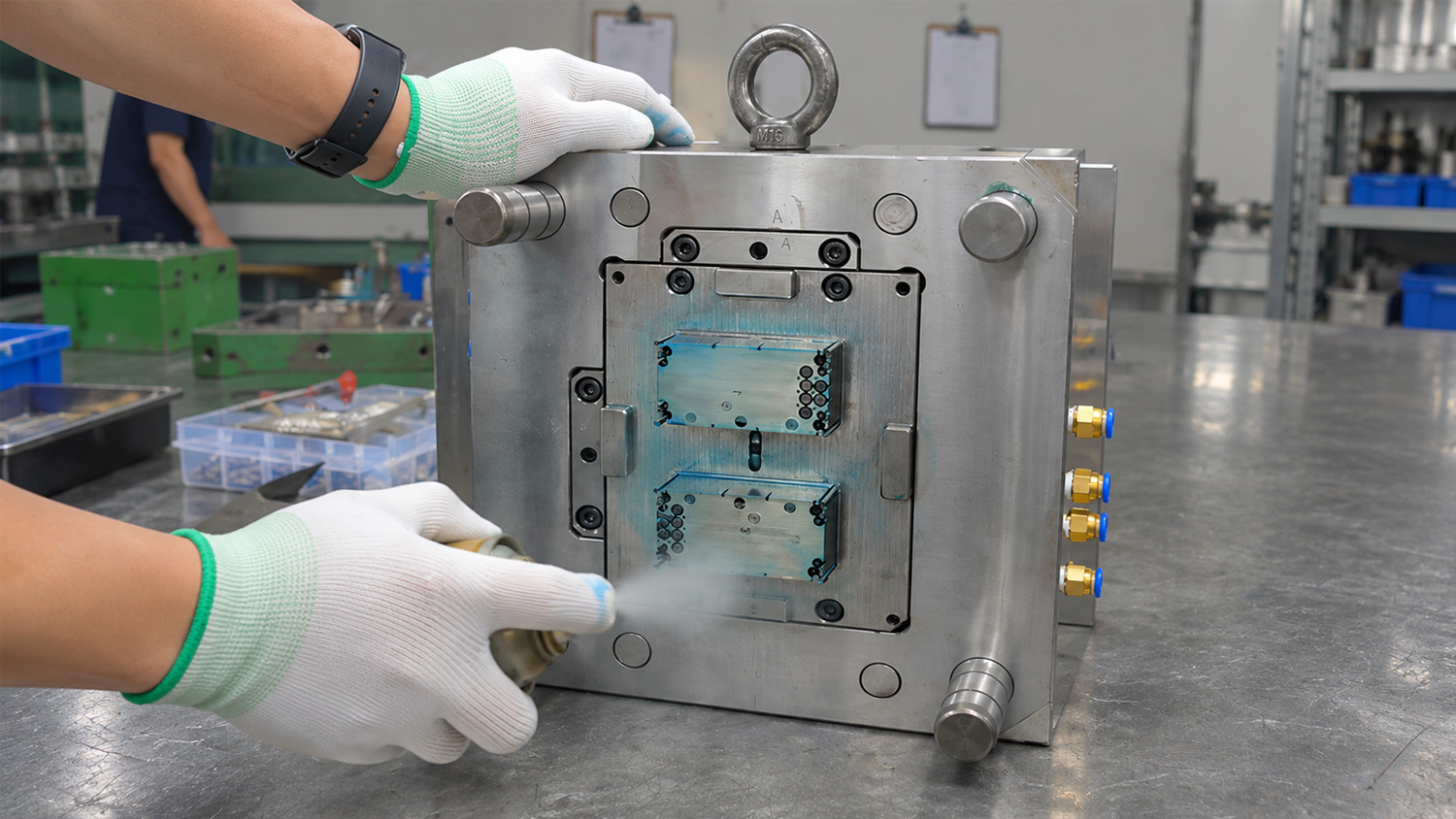
Thorough Cleaning
Mold cleaning should go beyond wiping visible surfaces. Oil stains and residual condensate must also be thoroughly removed, as they can contribute to mold corrosion. Proper cleaning is therefore an essential first step in mold maintenance.
Proper Rust Prevention
After cleaning, apply a thin, even layer of rust-preventive agent to the mold and ensure that the protective film is complete. An intact protective film helps reduce the risk of corrosion and should not be overlooked.
Humidity and Water Circuit Management
Humidity must be carefully controlled, and mold water-line connections should be inspected to prevent leakage into the mold. After production, the mold water circuit must be drained promptly to prevent residual water from increasing the risk of corrosion.
Effective mold maintenance requires consistent attention to cleaning, rust prevention, and water circuit management. Following these three practices helps reduce corrosion risks, preserve mold precision, and support stable production.
ULO GROUP pays attention to every detail in manufacturing, incorporating proper mold maintenance into daily operations and applying refined management practices to preserve mold condition and support stable production.
— ULO GROUP