What Is VLAN Used For? Understanding Virtual LANs Through Network Segmentation
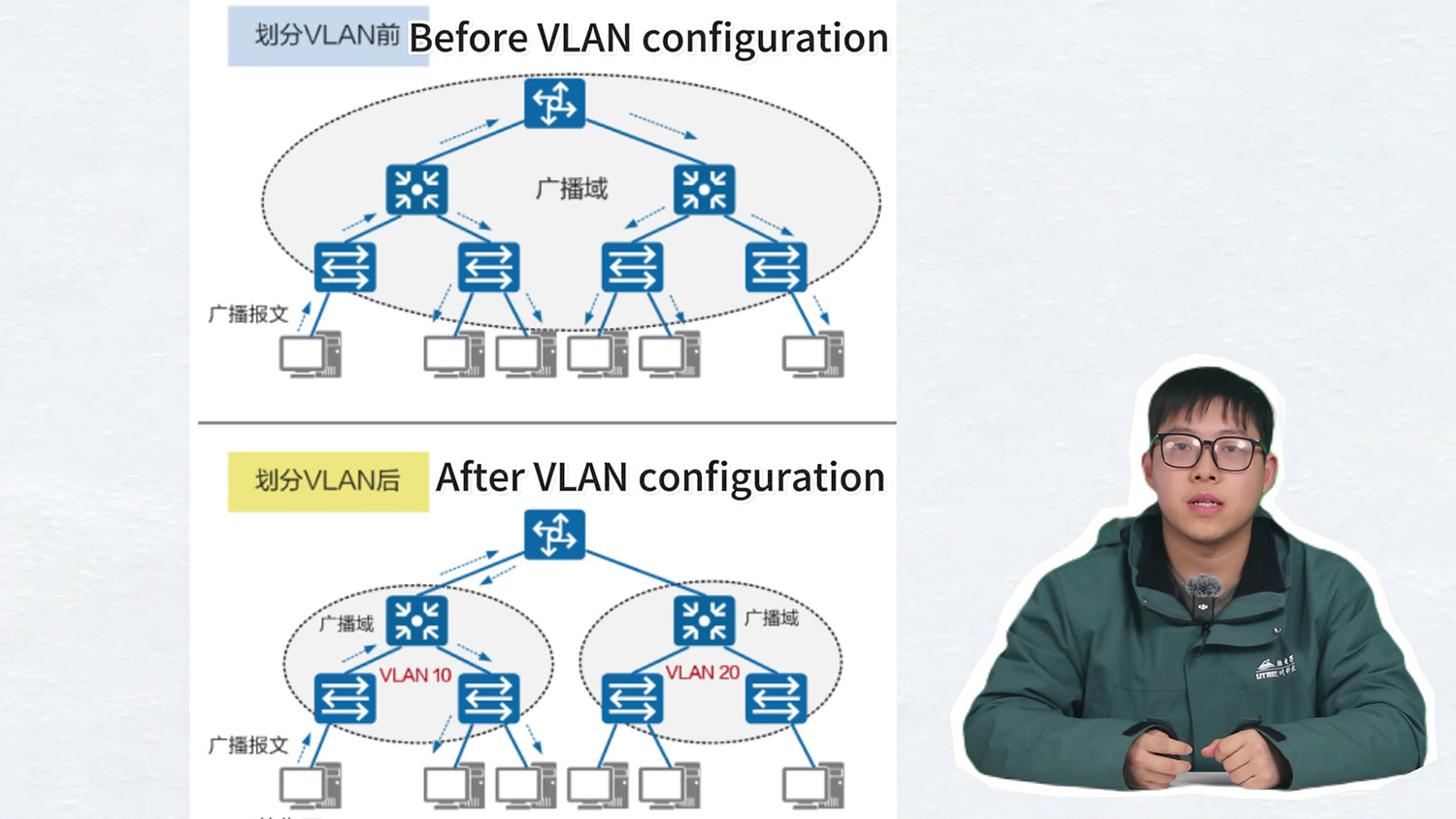
Without VLAN segmentation, devices from different departments sharing a switch typically belong to the same broadcast domain, allowing broadcast frames to reach all devices. VLAN (Virtual Local Area Network) divides a physical network into multiple logical segments, isolating broadcast traffic and simplifying network management.
What Is VLAN?
VLAN (Virtual Local Area Network) is a logical network segmentation technology that allows devices to be grouped into separate logical networks through switch configuration. Each VLAN forms an independent broadcast domain, keeping network traffic within its designated segment.
What Happens Without VLAN Segmentation?
When devices from departments such as finance, administration, and R&D share the same network without VLAN segmentation, they all belong to the same broadcast domain. Broadcast frames can reach all devices within that domain, increasing unnecessary network traffic and making network management more complicated.
How Does VLAN Enable Network Segmentation?
By configuring different VLANs on a switch, devices from different departments can be assigned to separate logical segments. For example, finance, administration, and R&D devices can each be assigned to different VLANs for organized network management.
After segmentation, devices within the same VLAN can communicate normally, while different VLANs are isolated by default and cannot communicate directly. This helps reduce broadcast traffic between separate segments and creates a clearer network structure.
The primary purpose of VLAN is to divide a larger network into multiple independent broadcast domains, allowing devices in different segments to communicate according to the network configuration. This helps reduce broadcast traffic interference and makes network organization and management clearer and more flexible.
ULO GROUP continues to address the needs of industrial communication and connectivity, providing reliable solutions that help customers build well-structured, flexible, and efficient network systems.
— ULO GROUP