What New Demands Does Equipment Miniaturization Place on PCB Connections?
As industrial equipment becomes more compact and highly integrated, PCB connection solutions must meet the demands of electrical performance, connection reliability, and ease of assembly and maintenance within limited space. This brings new requirements for connector design and selection.
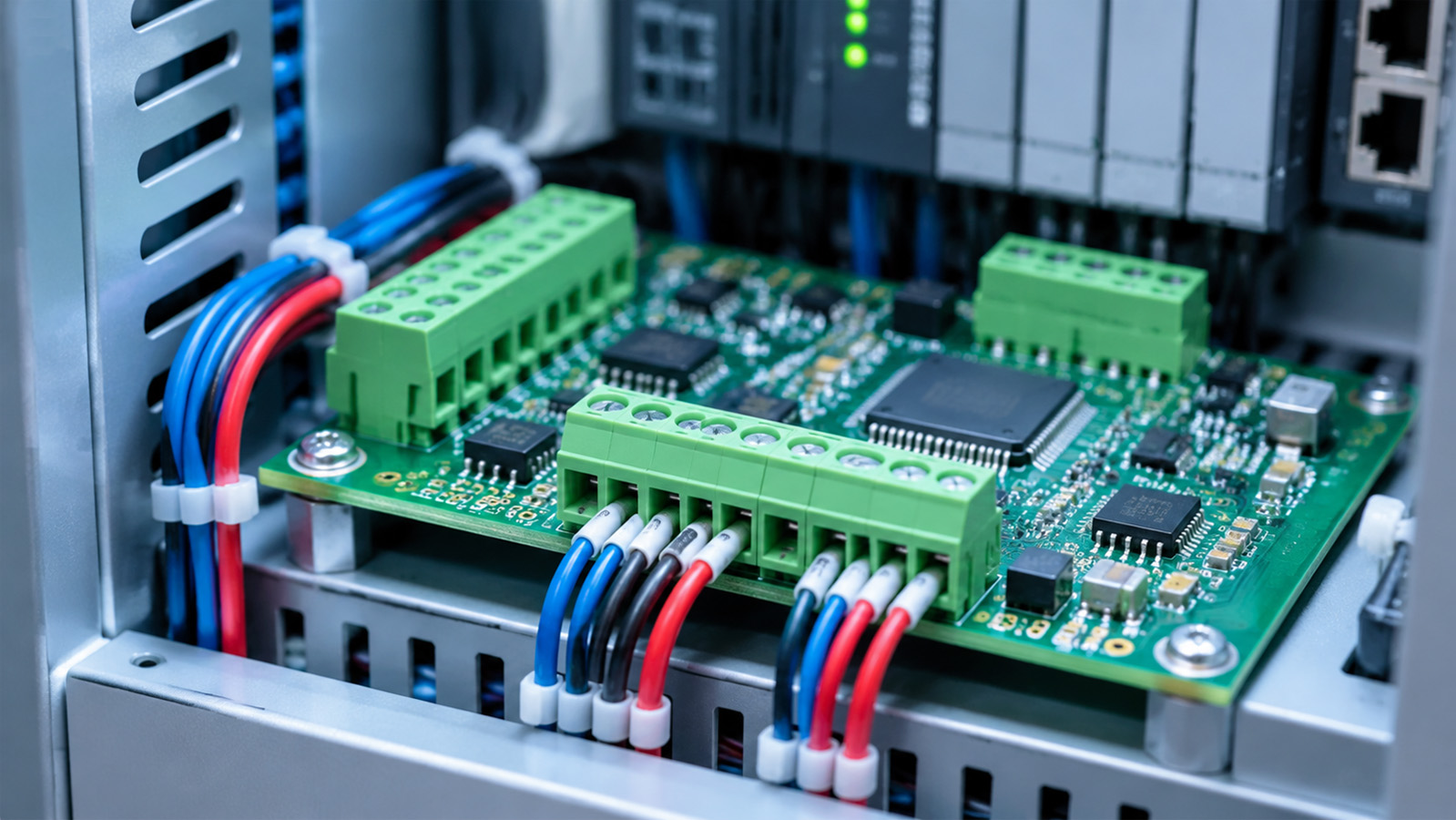
Suggested visual: An industrial control device interior, featuring a PCB and terminal blocks as the main subjects. Show the compact connection layout inside modern equipment. Use a clean blue-green industrial technology style to highlight precision connectivity and equipment miniaturization.
Space Efficiency
Power, control, and communication wiring must often be arranged and connected within the limited space of a PCB and equipment enclosure. PCB terminal blocks must not only meet electrical requirements but also accommodate wiring direction, operating space, and future maintenance needs. Proper structural design helps improve internal space utilization.
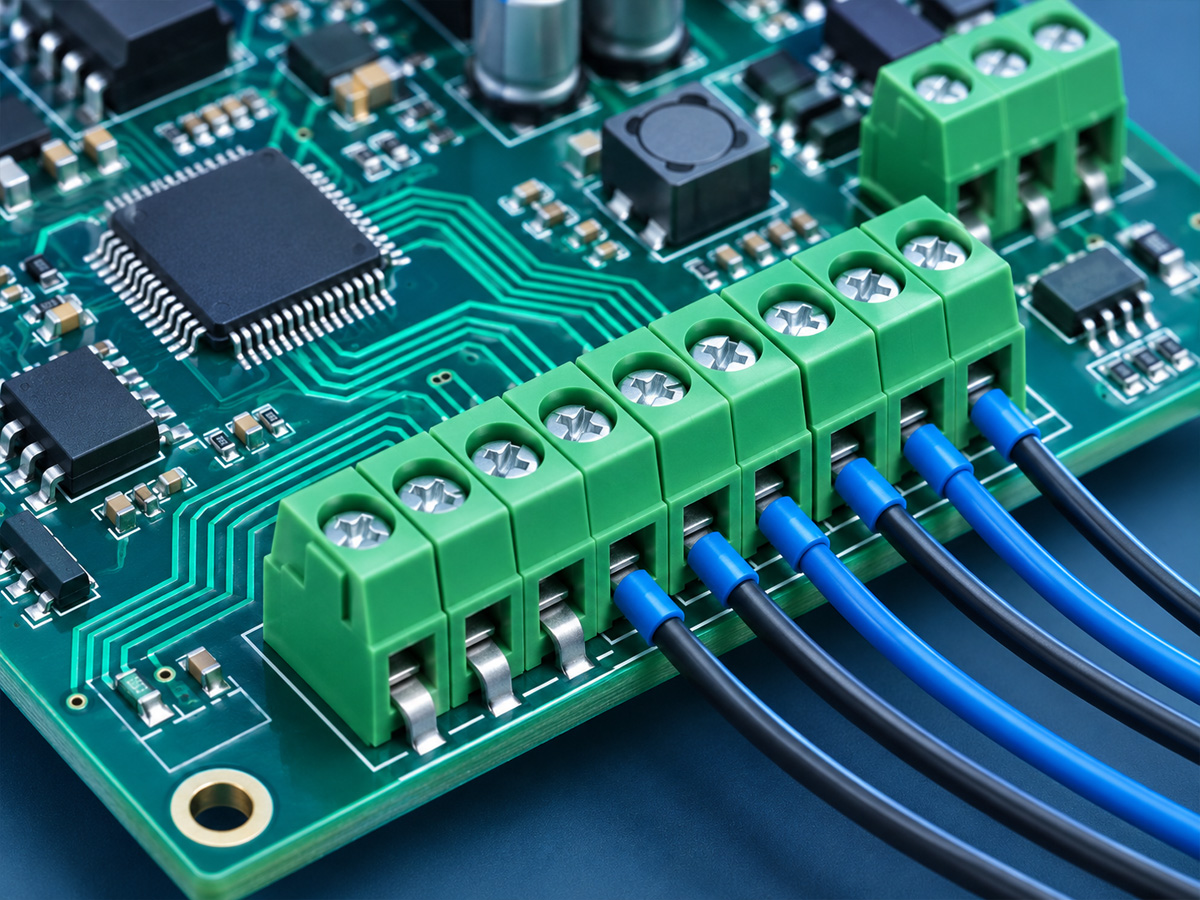
Reduced terminal spacing places greater demands on insulation performance, temperature rise, and assembly conditions. Designers need to evaluate rated voltage, current, conductor cross-sectional area, creepage distances, and electrical clearances rather than focusing solely on reducing product size.
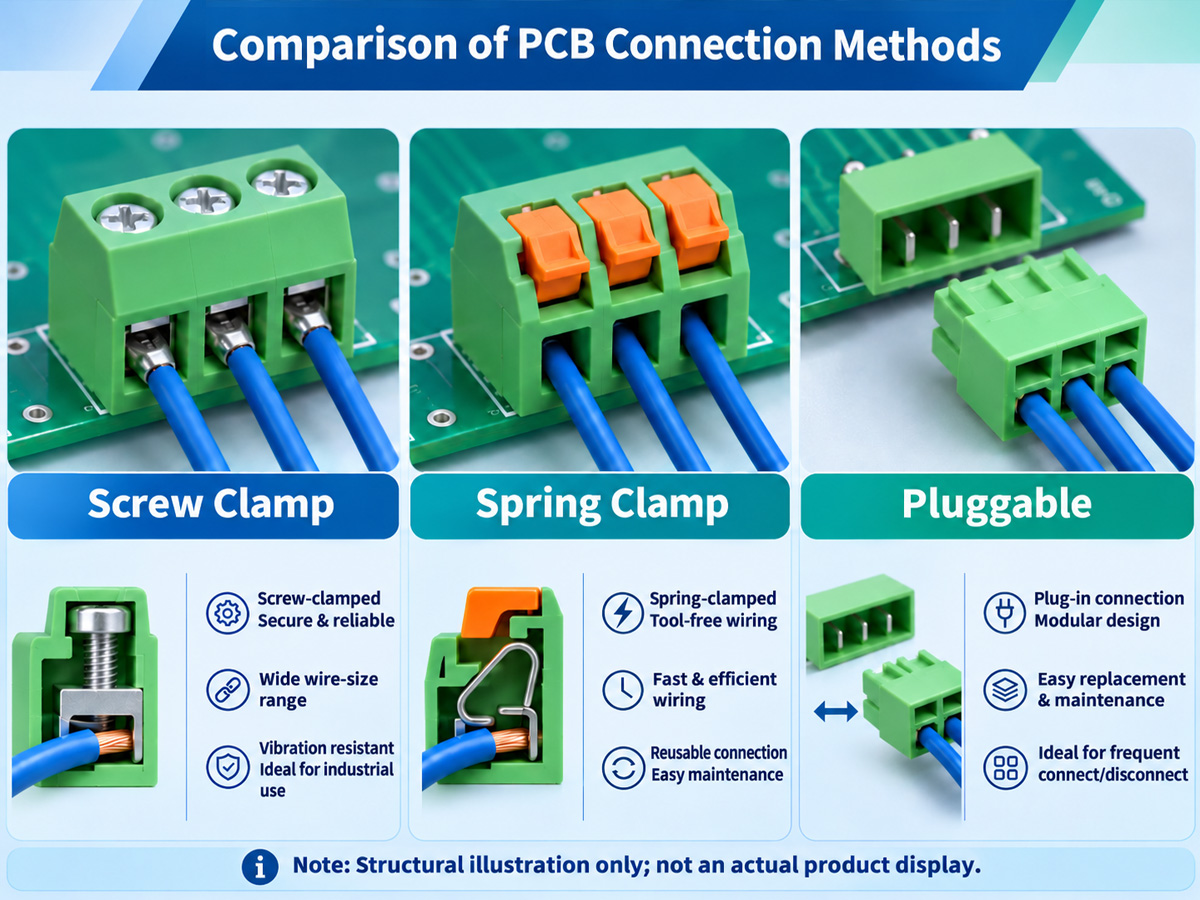
System-Level Design
ULO GROUP's PCB terminal blocks offer options for different structural requirements. Actual suitability should be evaluated based on product specifications, equipment conditions, and project validation results.
ULO GROUP drives innovation through precision connectivity and empowers industry through intelligent control, providing reliable connectivity and control solutions for global industrial automation.
— ULO GROUP