China Advances AI-Manufacturing Integration, Highlighting the Need for Industrial Connectivity
On October 20, 2026, China's Ministry of Industry and Information Technology (MIIT) announced plans to develop policies for next-generation smart manufacturing and deepen AI-manufacturing integration. With over 13,000 advanced-level smart factories and more than 1,000 application scenarios across 20 industries, demand for field data acquisition, device connectivity and industrial communication continues to grow.
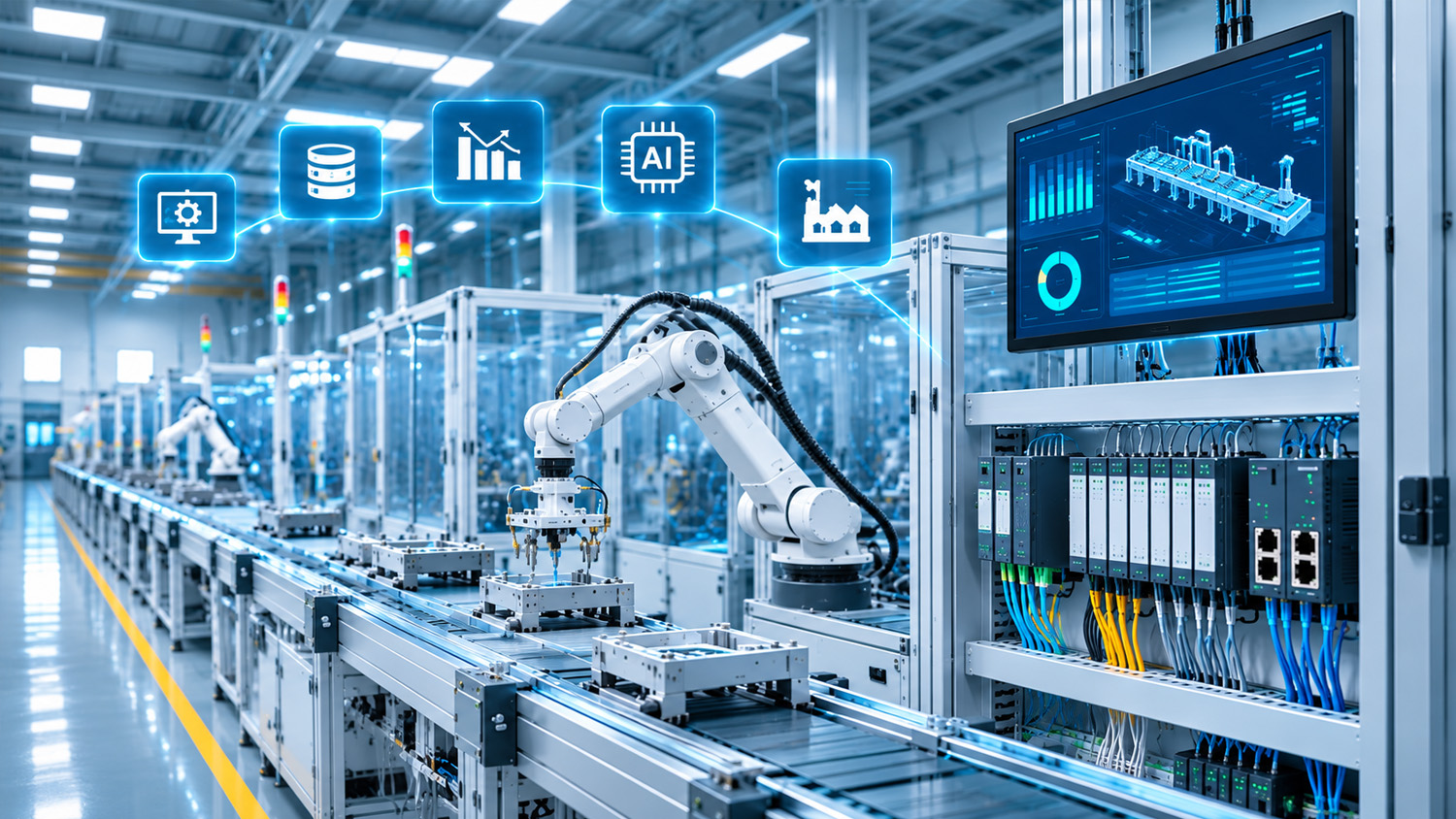
Smart Manufacturing Policies Gain Momentum
On October 20, 2026, MIIT announced that it was developing policy measures for next-generation smart manufacturing. The initiative aims to promote AI applications across the entire manufacturing chain and advance smart factory development and equipment upgrades through a tiered approach.Key areas include smart machine tools, industrial robots, inspection and control equipment, industry-specific AI models and industrial AI agents.
As of October 20, 2026, these policy measures were still under development.
Smart Factories Move Toward System Integration
Smart factories require more than automated equipment. They depend on effective data connectivity across production, inspection, control and management processes. Practical AI applications rely on accurate, continuous operational data and reliable communication between field devices, control systems and higher-level platforms.
Manufacturers therefore need to consider equipment connectivity, signal acquisition, protocol interoperability and industrial networking alongside software platforms and AI technologies.
Growing Demand for Field Data Connectivity
Remote I/O modules, protocol converters and industrial Ethernet switches play complementary roles in field data acquisition and communication. Remote I/O modules collect signals from sensors and actuators, protocol converters enable communication between devices using different interfaces or protocols, and industrial switches connect devices and forward data across industrial networks.
In the international I/O market, Siemens, Phoenix Contact, Weidmüller, Beckhoff and WAGO have established product portfolios. ULO GROUP also offers remote I/O modules, protocol converters and industrial Ethernet switches, supporting field signal acquisition and industrial communication across different automation applications. Specific protocol and function support should be confirmed against the relevant product model and firmware documentation.
Connectivity and Control Support Smart Upgrades
Smart factory performance depends not only on the automation level of individual machines but also on reliable data exchange, timely equipment status monitoring and the flexibility to expand production lines.Planning I/O points, communication interfaces and network architecture at an early stage helps simplify system integration, future expansion and maintenance.
As AI becomes more deeply integrated into manufacturing, industrial connectivity and control infrastructure with clearly defined interfaces, reliable communication and scalable architectures will remain essential to smart factory development.
To meet the evolving needs of smart manufacturing, ULO GROUP continues to develop its industrial communication and field control portfolio, providing reliable connectivity solutions to support the digital and intelligent transformation of manufacturing equipment.
— ULO GROUP