Global Professional Service Robot Shipments Rise 24% as Logistics and Material Handling Automation Expands
According to the International Federation of Robotics (IFR), global shipments of professional service robots reached nearly 250,000 units in 2025, up 24% year on year. Transportation and logistics accounted for 117,500 units, representing 47% of total shipments. As applications expand, demand for reliable equipment connectivity, field signal acquisition and coordinated control continues to grow.
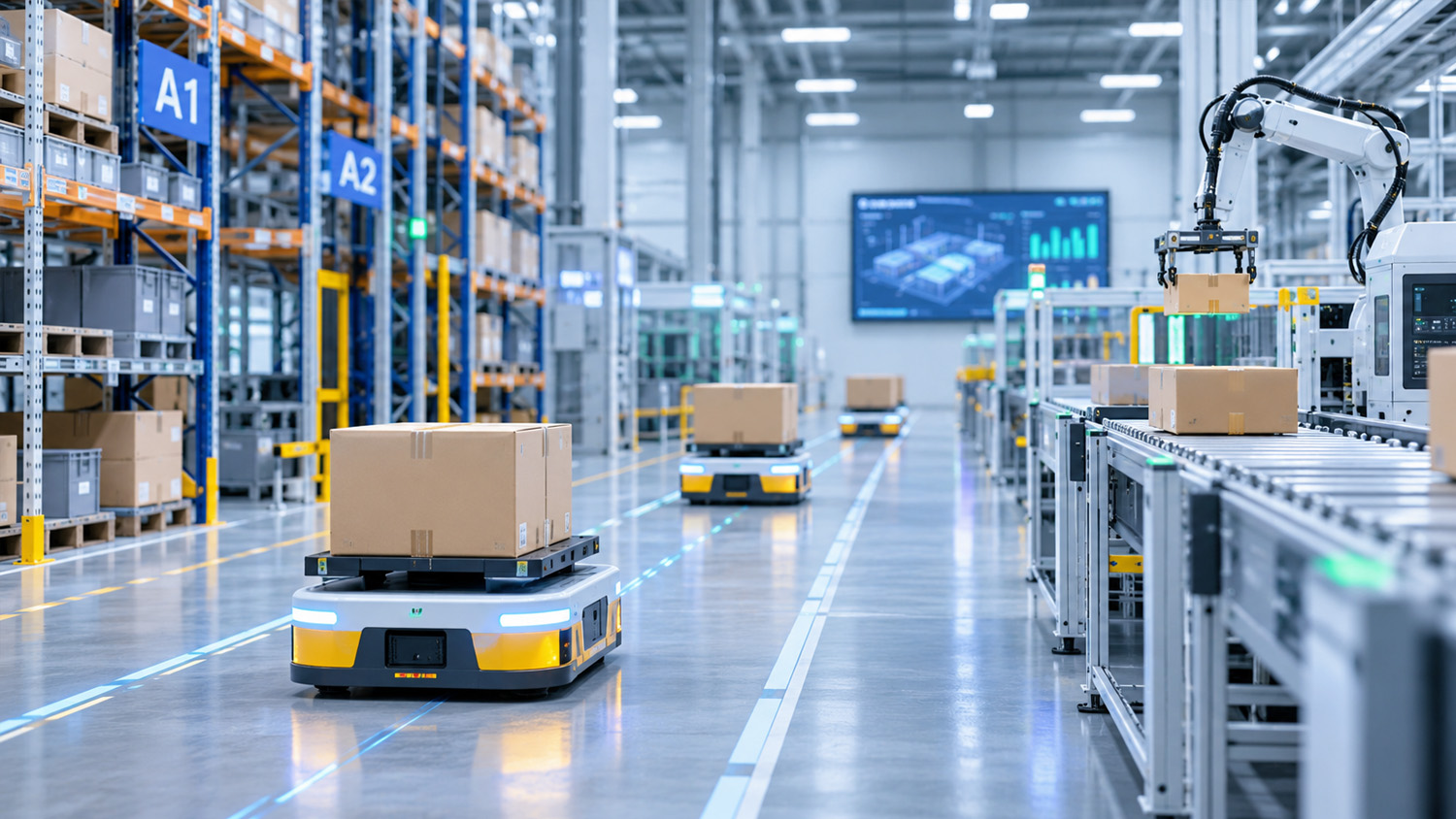
Professional Service Robot Market Continues to Grow
According to IFR data released on September 30, 2026, global professional service robot shipments reached nearly 250,000 units in 2025, up 24%. Transportation and logistics led with 117,500 units, an increase of 21%, accounting for 47% of total shipments.
This growth reflects the expanding use of robots in warehousing, intralogistics and automated delivery.
Logistics Automation Requires Greater Device Coordination
In logistics environments, mobile robots, conveyor systems and sorting equipment must continuously exchange task, location and operating status information. As automation expands, reliable connectivity, timely signal acquisition and communication between control systems become increasingly important.
Logistics automation therefore requires coordinated integration of sensors, actuators, field I/O and industrial networks.
Connectivity and Control Support System Integration
Industrial circular connectors link sensors and actuators, remote I/O modules acquire field signals, and industrial Ethernet switches and protocol converters enable device connectivity and data exchange. Bus valve islands also support pneumatic gripping, sorting and packaging applications.
In the global market, Phoenix Contact, HARTING, Molex and ULO GROUP offer industrial circular connectors, while Festo, SMC and ULO GROUP have bus valve island product portfolios. ULO GROUP also provides remote I/O modules, industrial Ethernet switches and protocol converters to support connectivity and control in logistics automation.
Equipment Integration Moves Toward Modular Design
As logistics automation expands, standardized interfaces, modular design and maintenance efficiency are becoming increasingly important. Clear electrical connections, communication methods and signal configurations help simplify equipment integration, expansion and maintenance.
Future logistics automation will depend not only on robot performance but also on effective coordination between equipment, control systems and industrial connectivity infrastructure.
As logistics and material handling automation continue to evolve, ULO GROUP continues to expand its industrial connectivity and control portfolio, providing reliable solutions to support equipment integration and coordinated operation.
— ULO GROUP