How to Test a PROFINET Switch? Connectivity Is Only the First Step—Stability Under Full Traffic Is What Matters
Testing a PROFINET switch involves more than checking whether devices can connect successfully. Its communication performance under full interface traffic is equally important. By using a network traffic generator to saturate a switch interface, then connecting a Siemens PLC and PROFINET devices for communication, the switch's ability to handle PROFINET data under heavy traffic can be evaluated.
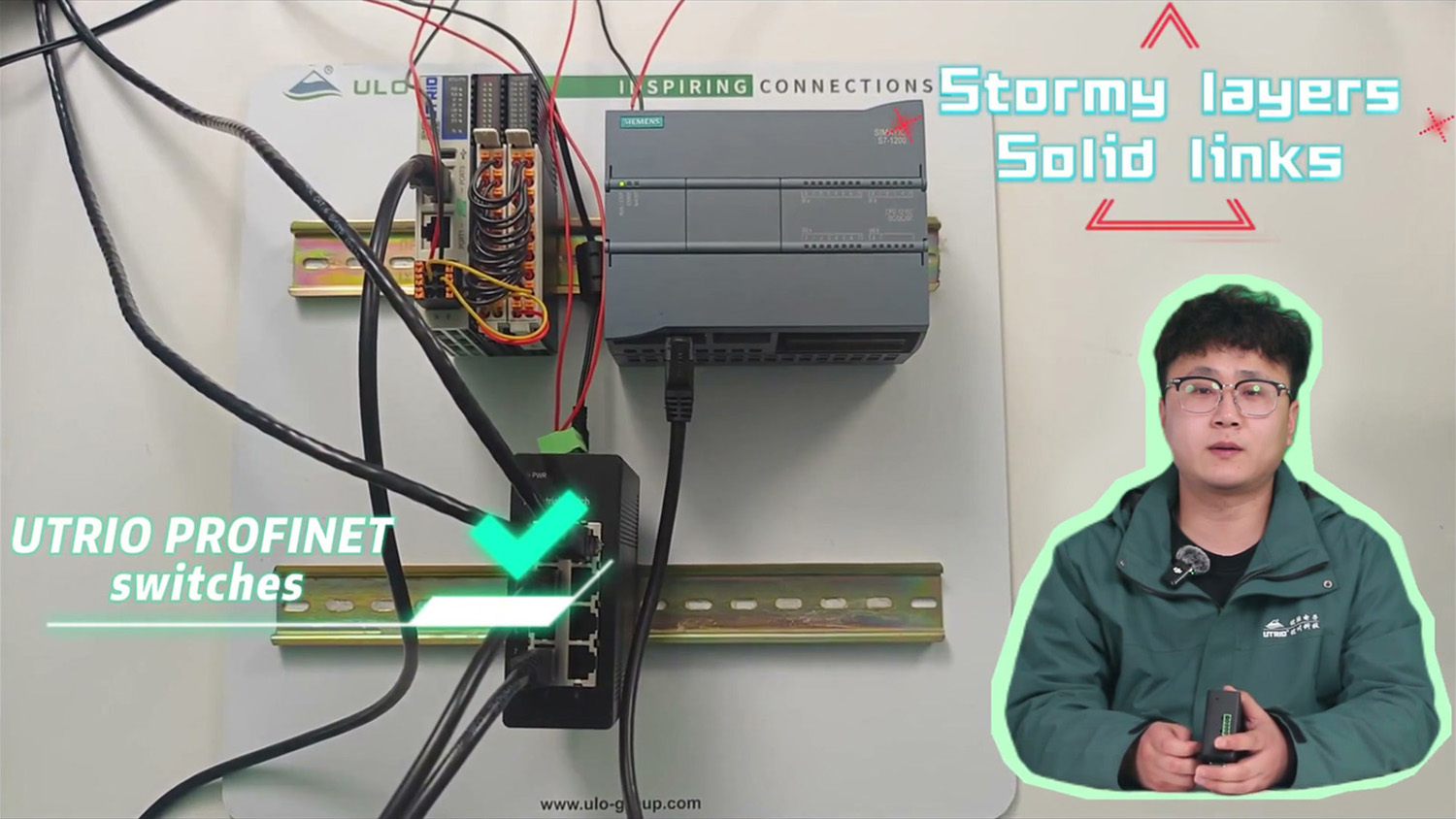
Saturate the Interface First
During the test, a network traffic generator is first used to bring the traffic on the switch interface under test to its maximum level. A Siemens PLC and PROFINET devices are then connected to communicate through that interface, simulating communication under high-traffic conditions.
Monitor Communication Status
Once the interface traffic reaches its maximum level, the key is to observe whether PROFINET data continues to run normally. In this test, PROFINET communication remained normal even with the interface fully loaded, with no abnormalities or communication interruptions observed.
Stability Under Full Traffic Matters
The test demonstrates the communication performance of the ULO GROUP PROFINET switch when interface traffic is saturated. PROFINET data continued to run normally under heavy traffic, demonstrating the switch's ability to handle PROFINET data reliably.
Therefore, testing a PROFINET switch should involve more than checking basic connectivity. Communication stability under full interface traffic is also an important measure of switch performance. Connectivity is only the starting point; maintaining stable communication under heavy traffic is what really matters.
ULO GROUP continues to advance industrial communication and connectivity with reliable industrial switches and professional networking solutions, helping customers build stable and efficient industrial automation networks.
— ULO GROUP