Why Do PCB Terminal Blocks Overheat? Common Causes and Troubleshooting
PCB terminal blocks connect external wires to circuit boards. Some heat generation during operation is normal, but excessive temperature rise requires attention. Common causes include excessive current, poor contact, improper wire sizing, loose connections, and insufficient heat dissipation.
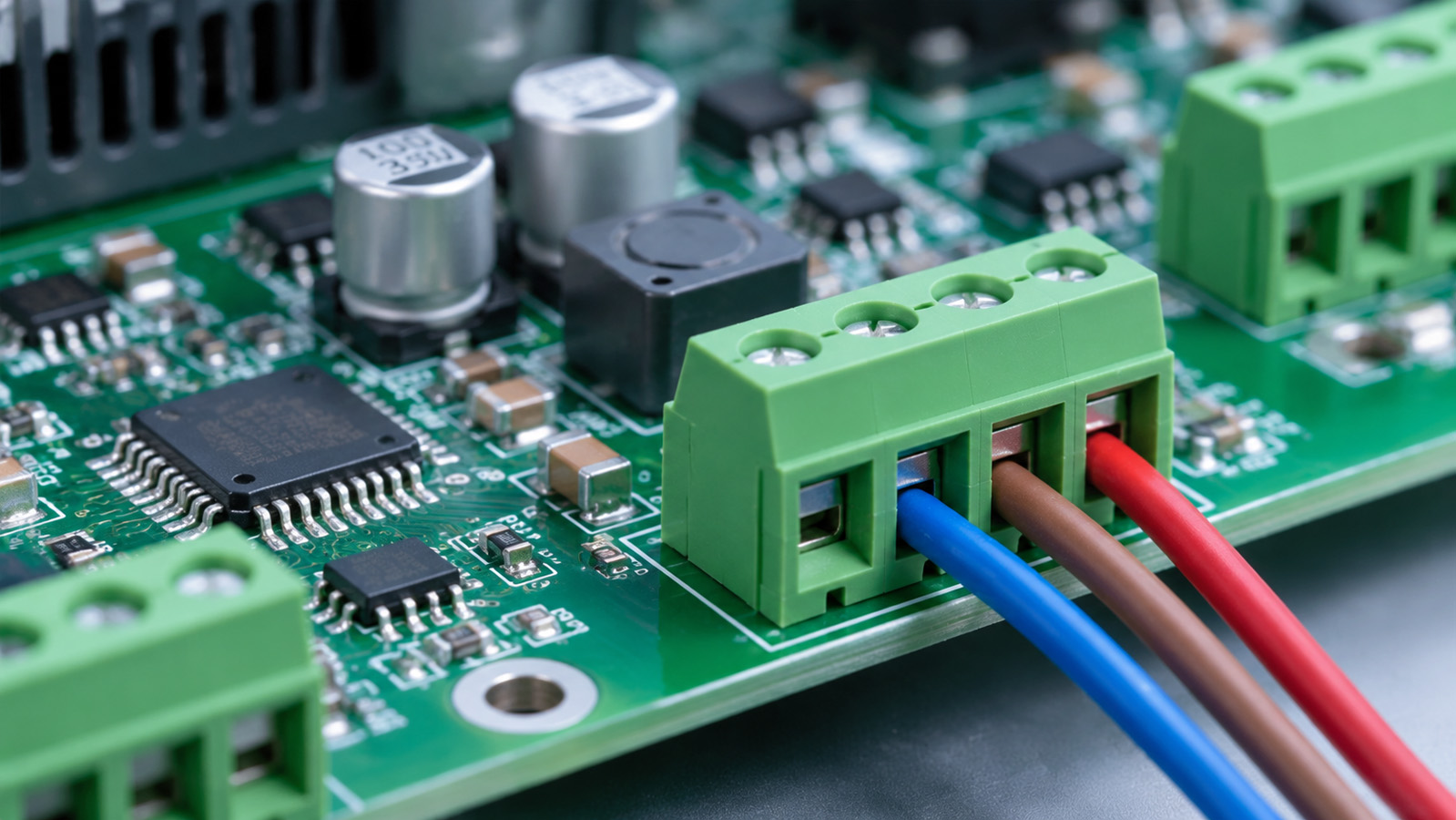
Common Causes
Current flowing through conductors and contact points generates heat. Abnormal temperature rise may result from excessive load current, high contact resistance, mismatched wire sizes, loose connections, or poor heat dissipation. The actual operating conditions and terminal ratings should be considered when identifying the cause.
Key Checks
First, check whether the operating current is within the rated limits of the terminal block and wires. Inspect the wire strip length, insertion depth, and clamping condition. For screw-type terminals, ensure the tightening torque meets product requirements. The use of wire ferrules for stranded wires should follow the product specifications.
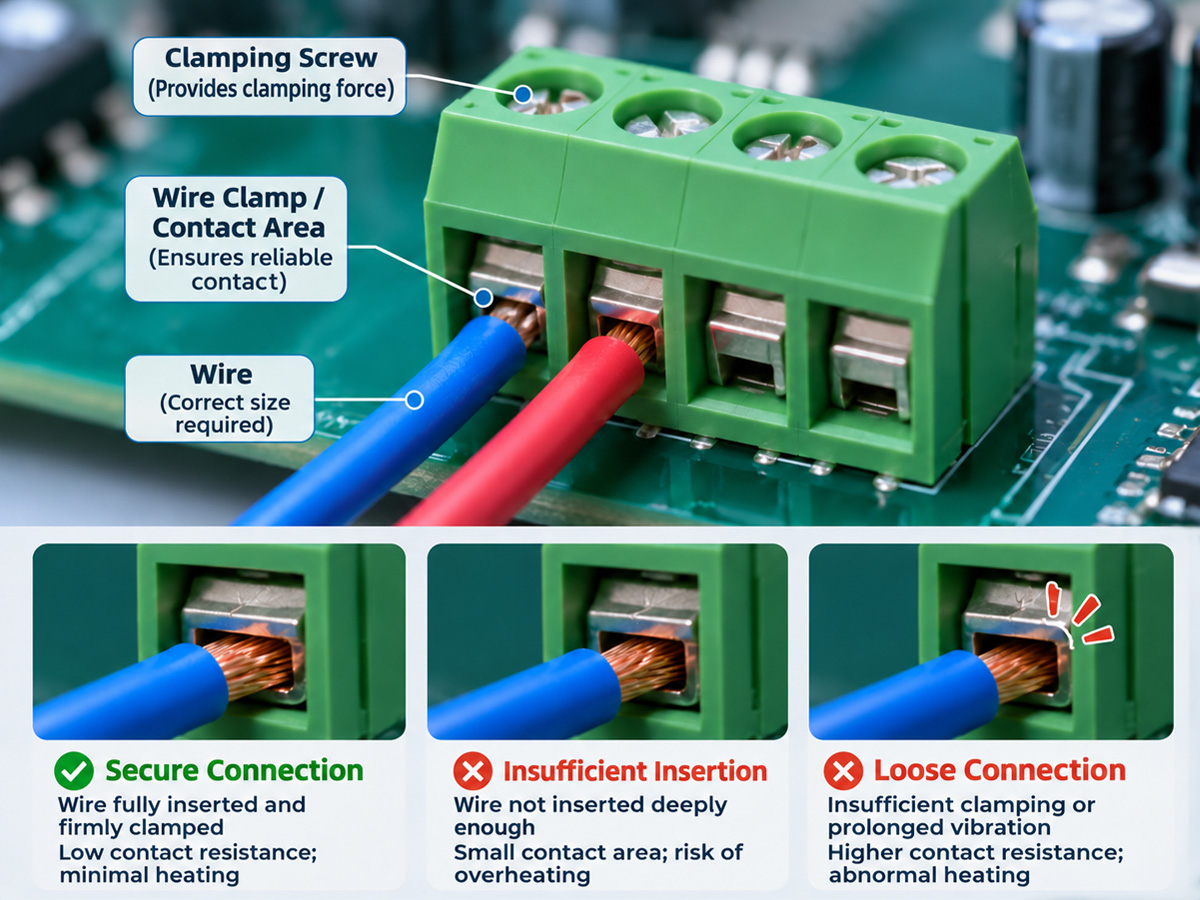
Testing and Selection
If terminals show discoloration, insulation damage, or persistent abnormal heating, stop the affected equipment or circuit. After safely isolating the power supply, qualified personnel should inspect the connection. Temperature rise and contact resistance tests can help identify the cause.
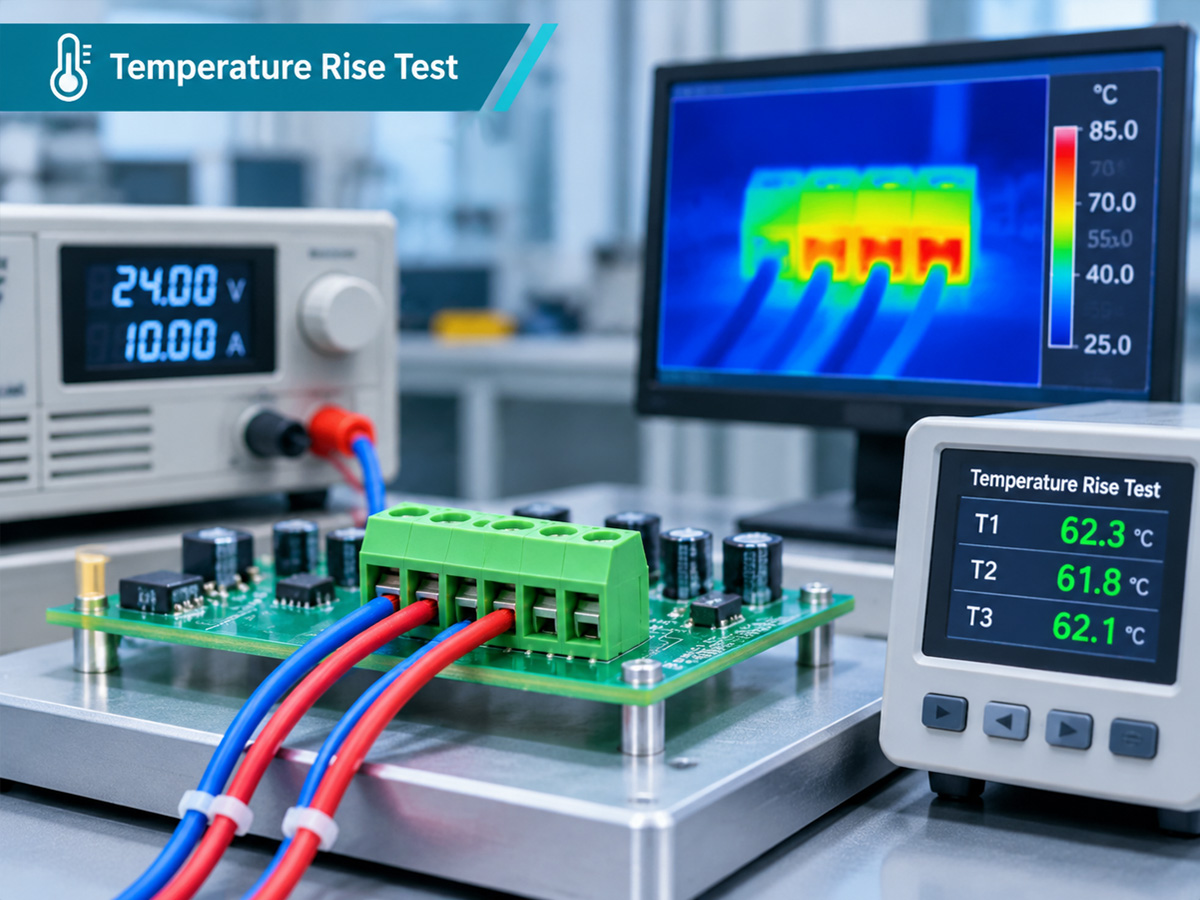
Precision Connectivity Drives Innovation. Intelligent Control Empowers Industry. ULO GROUP delivers reliable connectivity and control solutions for industrial automation.
— ULO GROUP