What Does “Port Mirroring” in an Industrial Ethernet Switch Actually Mirror?
In industrial network maintenance, port mirroring does not copy the switch itself. It copies the traffic passing through a selected port and forwards that copy to another designated port, where a computer or packet-analysis tool can examine it. This enables packet capture, network troubleshooting, and protocol debugging while keeping the monitoring device out of the live communication path.
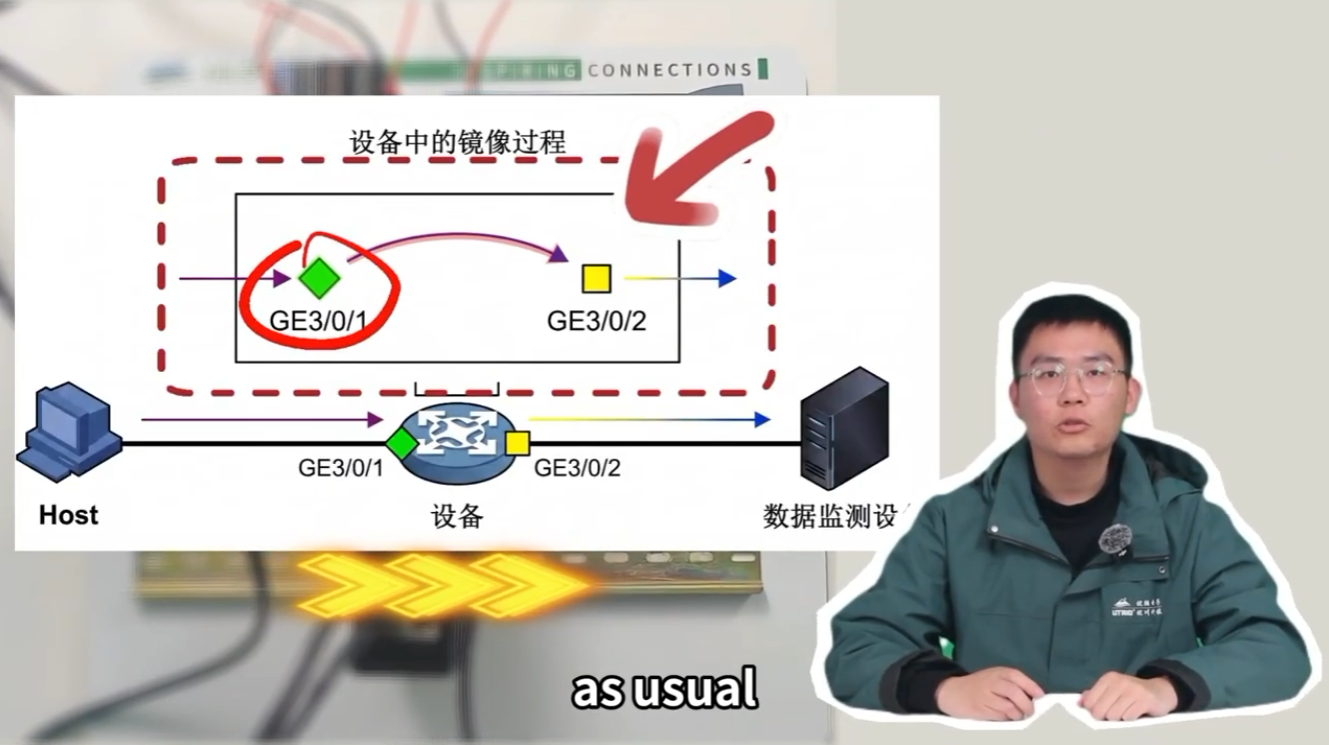
It Mirrors Traffic, Not the Switch
When people first hear the term “port mirroring,” they may assume that the switch is copying itself. In fact, port mirroring on a ULO GROUP industrial Ethernet switch copies the network traffic that passes through a selected port. It works much like a photocopier for data: the switch creates a copy of the selected port’s traffic and sends it to a preconfigured destination port.
Sending a Copy to the Destination Port
In the connection shown in the video, a device is connected to port GE3/0/1. The switch copies the traffic from that port and forwards the copy to GE3/0/2. Monitoring equipment or a computer running packet-capture software can then connect to the mirror destination port and view the copied traffic independently. The original port continues its normal communication role, while the mirror destination is used for observation and analysis.
Troubleshooting Communication Issues
When device communication is unstable, a network connection is abnormal, or protocol exchanges need to be checked, the traffic from the affected port can be mirrored to a computer for packet capture. Reviewing the captured packets helps maintenance personnel examine the communication process and may help identify where an issue occurs. As shown in the video, common applications include packet analysis, network troubleshooting, and protocol debugging.
Summary
Port mirroring copies the traffic from one port so that it can be viewed and analyzed separately; it does not copy the switch itself. For industrial network maintenance, this function provides a practical way to make communication details visible and support fault investigation.
“Making industrial communications visible and analyzable is how ULO GROUP connects field operations with intelligent control.”
— ULO GROUP