Why Do Some Applications Require Solid-State Relays Instead of Conventional Relays?
Conventional relays are versatile and cost-effective for routine control. However, in applications that require frequent operation, fast switching, quiet operation, or a long switching life, mechanical contacts can become a limitation. ULO GROUP solid-state relays contain no mechanical contacts and are better suited to these operating demands.
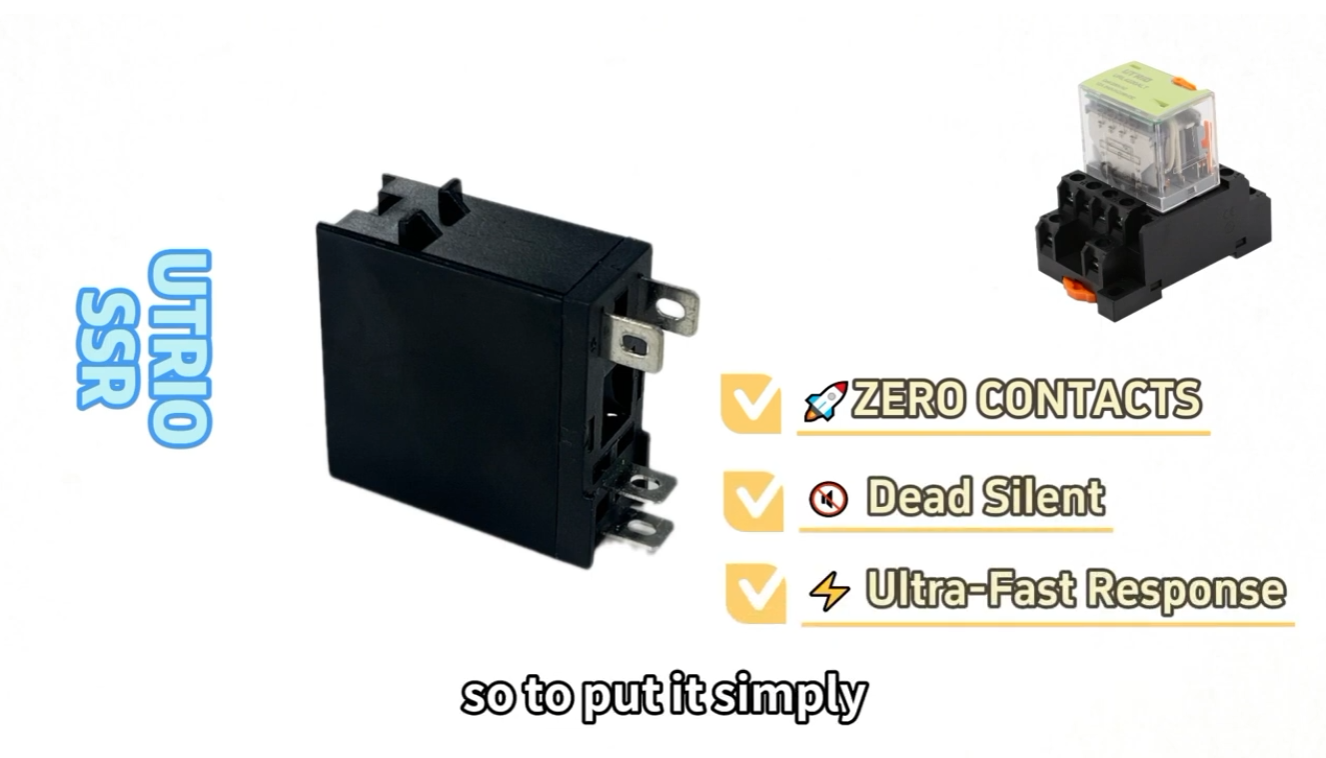
Conventional Relays for Routine Control
Conventional relays contain mechanical contacts and complete switching through the closing and opening of those contacts. Their strengths are versatility and cost-effectiveness, making them suitable for routine control applications. Choosing a solid-state relay is therefore not about replacing every conventional relay; it depends on the actual operating conditions.
Frequent Switching Adds Wear
When a control circuit requires frequent operation and rapid switching, especially where mechanical actuation noise is undesirable, the contacts in a conventional relay must perform more switching cycles. Repeated closing and opening causes mechanical wear, making mechanical life an important selection consideration.
Where Solid-State Relays Fit
ULO GROUP solid-state relays contain no mechanical contacts, so their switching action produces no mechanical pull-in noise and can respond faster. Their contactless switching is well suited to frequent, high-speed switching. For control applications that require high switching frequency, quiet operation, and long switching life, solid-state relays offer a better fit.
Summary
Conventional relays are suitable for routine control, while solid-state relays are better suited to high-frequency switching, quiet operation, and applications where long switching life is important. The key to relay selection is not which solution is more “advanced,” but whether its characteristics match the way the equipment operates in the field.
“Every stable switching action reflects ULO GROUP’s commitment to reliable industrial connections that support the continuous operation of field equipment.”
— ULO GROUP